



Botox for Forehead Lines vs. Frown Lines vs. Crow’s Feet in Vero Beach: Why Each Area Is Treated Differently
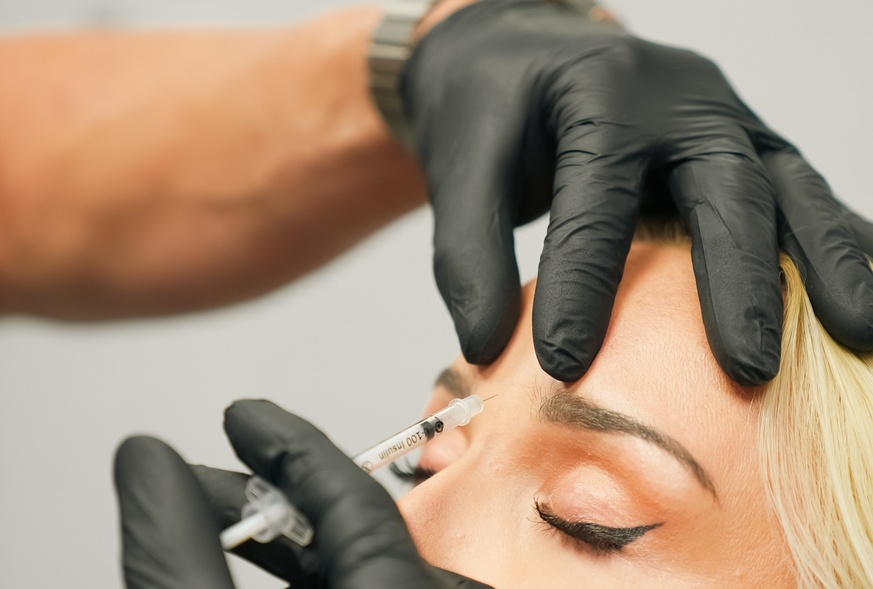


Forehead lines, frown lines, and crow’s feet may all be expression wrinkles, but they are created by different facial muscles. That is why Botox treatment should not be approached as one standard set of injections across the upper face. Placement, treatment pattern, and the amount used depend on the muscles involved, how strongly they move, and an individual patient’s anatomy.
BOTOX® Cosmetic is FDA-approved in adults for the temporary improvement of moderate to severe forehead lines associated with the frontalis muscle, glabellar or “frown” lines associated with the corrugator and/or procerus muscles, and lateral canthal lines—commonly called crow’s feet—associated with the orbicularis oculi.
What Causes Horizontal Forehead Lines?
The horizontal lines across the forehead are primarily created by the frontalis muscle. This is the broad muscle that lifts the eyebrows. Every time you raise your brows in surprise, concentration, or conversation, the skin over the forehead folds horizontally.
Botox works by temporarily reducing targeted muscle activity. However, the forehead requires particularly thoughtful treatment because the frontalis also plays an important role in maintaining eyebrow position.
The FDA prescribing information for BOTOX Cosmetic specifically instructs providers to evaluate the relationship between forehead size, the distribution of frontalis activity, and the location of the eyebrows when determining injection sites. It also recommends treating forehead lines in conjunction with the glabellar area to help minimize the potential for brow drooping.
For that reason, two Vero Beach patients with similar-looking forehead lines may not necessarily have identical treatment plans.
Why Are the “11s” Between the Eyebrows Different?
Frown lines, often called the 11s, form vertically between the eyebrows. Unlike horizontal forehead lines, they are primarily associated with the corrugator and procerus muscles, which pull the brows inward and downward during expressions such as frowning or concentrating.
Because these muscles move in a different direction than the frontalis, the injection pattern is also different. The FDA-approved BOTOX Cosmetic technique for glabellar lines targets the corrugator and procerus muscles rather than treating the forehead itself.
Muscle size and strength can also vary considerably between individuals. Someone with a strong frown pattern may have noticeably different movement from someone whose glabellar muscles are less active.
This is one reason a provider evaluates facial movement rather than simply looking at wrinkles while the face is at rest.
What Causes Crow’s Feet Around the Eyes?
Crow’s feet radiate outward from the corners of the eyes and become especially noticeable when smiling or squinting.
These lines are associated with activity of the orbicularis oculi, the circular muscle surrounding the eye. The FDA labeling for BOTOX Cosmetic identifies this muscle as the primary target for treating moderate to severe lateral canthal lines.
Because the eye area has different anatomy from the forehead and glabella, Botox placement around the eyes follows its own treatment pattern. Even the shape of crow’s feet can vary: some people develop lines primarily beside the eye, while others have lines extending above and below the outer corner.
That variation makes careful assessment important before injections are placed.
Why Isn’t Botox Dosing the Same for Every Area?
The FDA-approved Botox treatment patterns for the forehead, glabellar lines, and crow’s feet use different injection locations and labeled doses. In other words, units used in one area should not automatically be copied to another area simply because both areas have wrinkles.
A provider also needs to consider how the different upper-face muscles interact. Relaxing one muscle can change the balance between muscles that raise and lower the eyebrows, which is why treatment planning involves more than counting visible lines.
At Refresh – Aesthetics & Wellness in Vero Beach, injectable treatments are approached through an individualized evaluation. Refresh also notes that Botox treatment plans should take facial features and patient goals into account rather than using a one-size-fits-all approach.
Should All Three Areas Be Treated at the Same Appointment?
Not necessarily. Some patients are primarily concerned with their 11s, while others notice forehead lines or crow’s feet more. Treating multiple areas may be appropriate for some people, but everyone does not automatically need all three.
The appropriate approach depends on facial anatomy, muscle strength, eyebrow position, existing lines, health history, previous injectable treatments, and individual goals. A qualified provider should evaluate the face both at rest and during movement before deciding where treatment is appropriate.
To learn more about Botox, schedule a consultation with Refresh – Aesthetics & Wellness in Vero Beach for a personalized evaluation.

